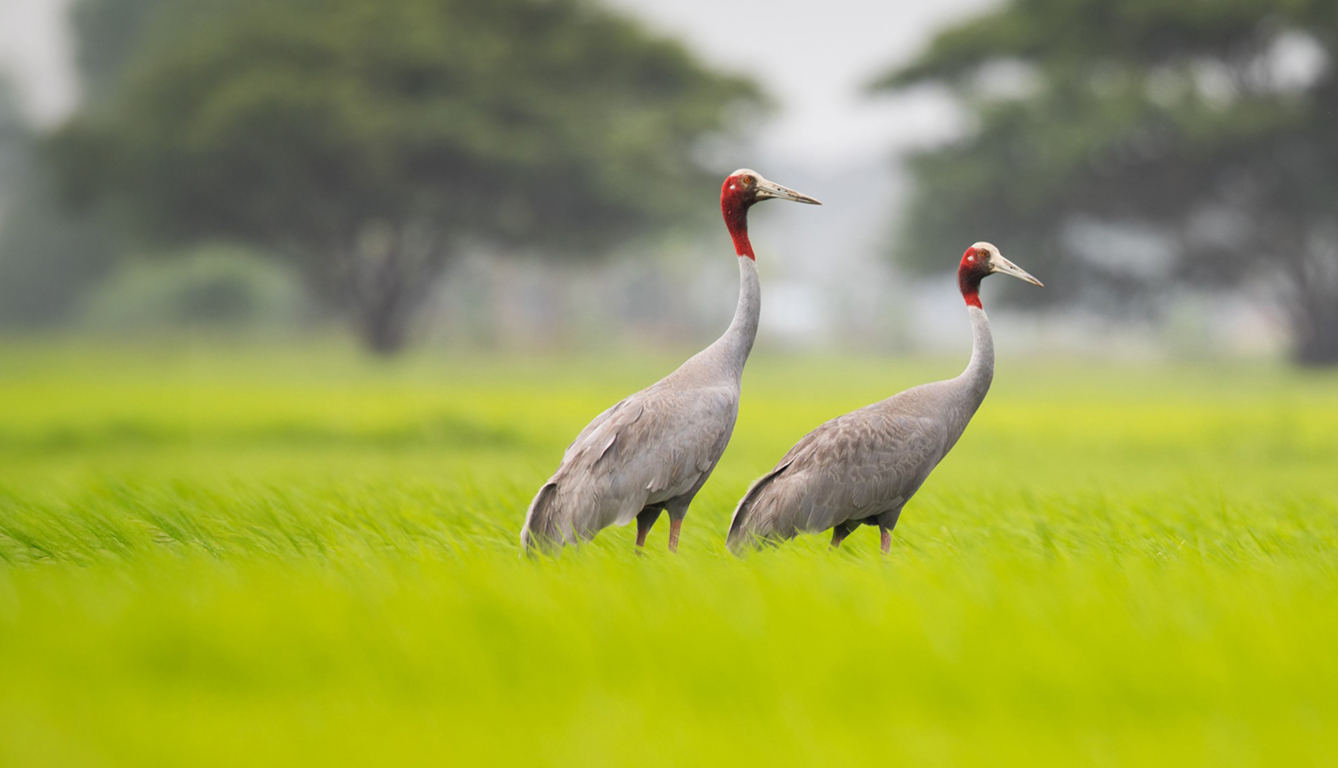
Lucknow: The Uttar Pradesh government has announced a comprehensive plan to conserve the Sarus crane, the world’s tallest flying bird and the state bird of Uttar Pradesh, while also promoting eco-tourism in the region.
Under the initiative, the Yogi Adityanath government will develop a “Sarus Circuit” aimed at protecting the bird’s natural habitats and raising awareness about wetland conservation.
Sarus Circuit to Be Developed in Mainpuri and Etawah
The proposed Sarus Circuit will be established across key wetland areas in Mainpuri and Etawah districts. The project will include wetlands located in Kirthua, Sahas, Kurra Jarawan, Soj and Saman in Mainpuri, along with Sarsai Nawar and Parauli Ramayan in Etawah.
These wetlands are known breeding and habitat zones for the Sarus crane, which is predominantly found across the Gangetic plains.
Focus on Conservation and Eco-Tourism
The project aims not only to protect the Sarus crane but also to promote eco-tourism activities in the region. The initiative is being implemented by the Forest Department through the UP Eco-Tourism Development Board.
Officials said the Sarus Circuit will help strengthen the conservation of wetlands while attracting tourists interested in wildlife and nature.
Development of Tourism Infrastructure
Several tourism facilities will be developed within the Sarus Circuit to improve visitor experience and awareness. These include:
- Entrance gates and scenic viewpoints
- Observation decks and boating areas
- Butterfly gardens and solar-powered site lighting
- Interpretation centres and parking facilities
In addition, information centres, eco-toilet blocks, interactive signboards, food kiosks and shops selling One District One Product (ODOP) items and souvenirs will be set up.
These facilities will allow visitors to observe the Sarus crane in its natural habitat and learn more about wetland ecosystems.
Boost to Wetland Conservation
Apart from protecting the Sarus crane, the project will also support the conservation of other bird species such as the grey heron and open-billed stork.
Officials said wetland conservation will help improve groundwater levels, reduce the impact of climate change and promote sustainable environmental development.
Opportunities for Local Communities
The development of eco-tourism is expected to create income and employment opportunities for local communities, encouraging them to participate actively in protecting wetlands and wildlife.
The initiative is also expected to increase environmental awareness among residents and tourists, strengthening efforts toward nature conservation in the region.