The Trade and Economic Partnership Agreement (TEPA) between India and the member states of the European Free Trade Association has completed two years since its signing, marking an important milestone in expanding trade, investment, and technology cooperation between the partners.
The agreement, signed with EFTA members Iceland, Liechtenstein, Norway, and Switzerland, moved from negotiation to implementation on October 1, 2025. The pact aims to strengthen economic ties through increased trade flows, investment opportunities, services collaboration, and long-term industrial partnerships.
PM Modi Highlights Expanding Global Trade Network
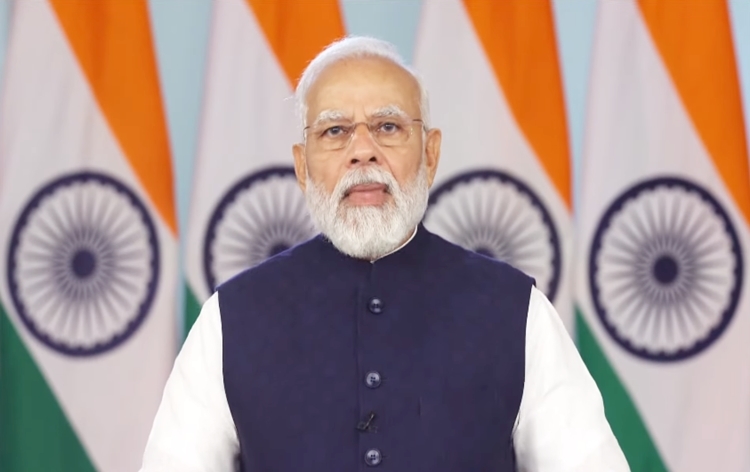
Prime Minister Narendra Modi said India has built a strategic network of Free Trade Agreements (FTAs) in recent years to strengthen the country’s global trade presence.
According to the Prime Minister, India now has FTAs with 38 partner nations, expanding market access for Indian businesses and strengthening the country’s integration with global supply chains.
He also noted that these agreements are creating new opportunities for India’s services sector, which has helped the country emerge as a hub for global capability centres across multiple industries.
India-EFTA Pact Opens High-Income Markets
Union Commerce and Industry Minister Piyush Goyal described the India-EFTA agreement as a long-term economic partnership.
He said the pact provides Indian exporters access to high-income markets while creating a $100 billion investment pathway over the next 15 years.
The minister added that the agreement will help Indian industries access specialised machinery, advanced technologies, and high-quality industrial inputs, strengthening domestic manufacturing and value addition.
Tariff Concessions to Boost Exports
Under the agreement, EFTA countries have committed to tariff concessions on 92.2% of tariff lines, covering 99.6% of India’s exports. This includes full coverage of non-agricultural products and concessions on processed agricultural goods.
India, in turn, has offered tariff commitments covering 82.7% of tariff lines, representing 95.3% of EFTA exports.
Sensitive sectors such as dairy, soya, coal, and certain agricultural products remain protected under the agreement, while the duty on gold remains unchanged.
Key Sectors Expected to Benefit
According to the Ministry of Commerce and Industry, the agreement is expected to strengthen India’s export presence in several sectors, including:
- Pharmaceuticals
- Textiles and garments
- Engineering goods
- Chemicals
- Processed foods
- Marine products
At the same time, Indian manufacturers will gain better access to precision machinery, advanced components, and specialised industrial inputs from EFTA countries.
Investment and Job Creation Opportunities
A key feature of the pact is the $100 billion investment commitment, which is expected to generate around one million direct jobs in India.
Investments are expected across sectors such as:
- Manufacturing
- Renewable energy
- Life sciences
- Engineering
- Research and development
- Digital technologies
Boost for Services and Professional Mobility
The agreement also includes provisions to strengthen cooperation in IT and IT-enabled services, professional services, and other knowledge-intensive sectors.
It enables the development of Mutual Recognition Agreements (MRAs) for professions such as nursing, chartered accountancy, and architecture, along with easier temporary mobility for professionals.
Opportunities for MSMEs and Regional Products
The pact is expected to benefit small businesses, farmers, fishers, MSMEs, start-ups, and women and youth entrepreneurs, enabling them to access high-value European markets.
Several Indian states are also expected to gain from the agreement, including:
- Maharashtra for grape exports
- Karnataka for coffee
- Kerala for spices and seafood
- North-Eastern states for horticulture products
Supporting India’s Export Growth Targets
The India-EFTA agreement aligns with India’s broader export strategy, which aims to achieve $1 trillion in merchandise exports and $1 trillion in services exports by 2030.
Officials said the pact will provide predictable access to developed markets, attract investment, and strengthen industrial growth, supporting India’s long-term vision of becoming a developed nation by 2047.