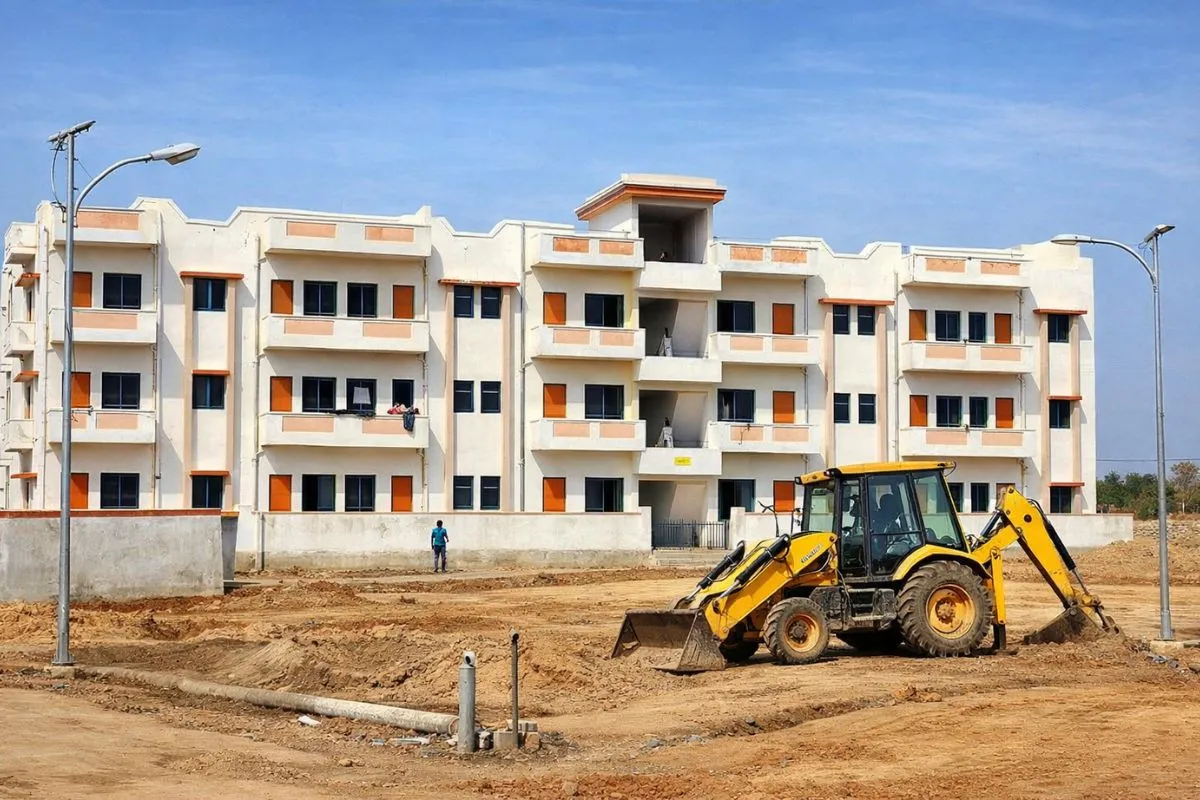
The Mukhyamantri Jan Awas Yojana has faced challenges as many housing units built far from city centres remain vacant. Taking note of the situation, the Rajasthan Government has announced a relief package, waiving interest and penalties on instalment payments for beneficiaries.
Officials said the move aims to revive several housing projects that are currently struggling due to lack of residents and basic infrastructure.
Lack of Basic Facilities Behind Vacant Houses
The government acknowledged that many housing projects under the scheme lack essential infrastructure such as roads, water supply, and electricity. As a result, a large number of houses remain unoccupied, and some projects are close to being abandoned.
To address the issue, urban local bodies will now assess the cost of external development works and use their own budgets to provide necessary facilities.
Urban Bodies to Develop Infrastructure
Under new guidelines issued by the Urban Development Department, Rajasthan, local municipal authorities will take responsibility for developing infrastructure such as:
- Roads
- Water supply
- Electricity connections
The government hopes these improvements will make the housing projects more livable and encourage people to move into the houses.
Decision Taken Amid Policy Revision
The decision comes at a time when the state government is in the process of revising the Jan Awas policy, with a new housing policy expected to be released soon.
Officials said the government’s objective is not only to construct houses but also to ensure that people actually settle in these residential areas.
Current Challenges in Jan Awas Projects
According to officials, several issues have affected the success of the scheme:
- Most projects are located far from city centres
- Poor road connectivity and transport facilities
- Low buyer interest, leading to many vacant houses
- Some projects are at risk of turning into abandoned structures
Proposed Changes in the New Housing Policy
The proposed policy under discussion includes provisions to ensure better planning of affordable housing projects.
Under the proposal:
- Houses for the Economically Weaker Section (EWS) and the Low-Income Group (LIG) should be located in areas where essential facilities such as electricity, water supply, transport, schools, and hospitals are available within a 500-metre radius.
- If a builder fails to provide houses or plots under the original project, they will be required to purchase plots or flats in government or development authority housing schemes for eligible beneficiaries.
Officials also indicated that future housing projects may avoid remote locations, focusing instead on areas with adequate infrastructure and connectivity.
Focus on Making Housing Schemes Livable
The relief package and policy reforms are aimed at ensuring that affordable housing schemes provide not just houses but also a sustainable residential environment, helping more families settle in these developments.