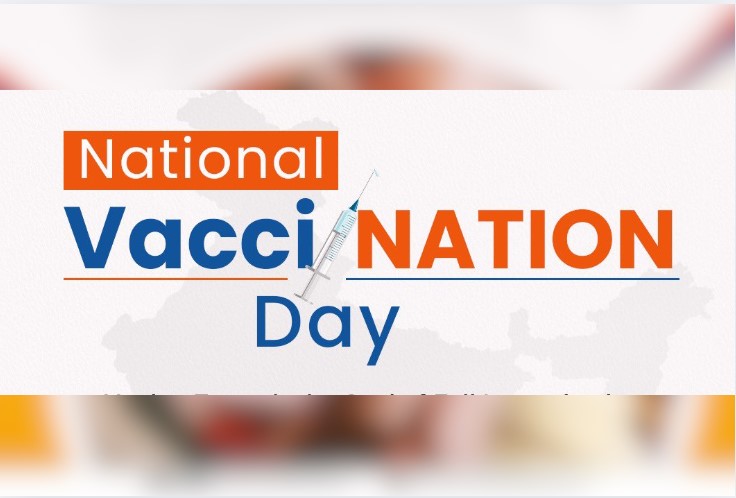
India observes National Vaccination Day on March 16 every year to highlight the importance of vaccination in protecting children from life-threatening diseases.
Vaccination has played a crucial role in saving millions of lives globally and has helped eliminate or control several dangerous diseases. As new infections continue to emerge, health experts stress the importance of ensuring that children receive vaccines at the right age and in the correct dosage.
Timely Vaccination Is Crucial for Child Health
According to the UNICEF, vaccines are most effective when administered on time according to a child’s age. Certain diseases can be particularly dangerous at specific ages.
For example, Polio primarily affects children under five years, which is why the polio vaccine is administered during early childhood. Missing or delaying vaccines can expose children to serious health risks.
Vaccines Given at Birth
Several important vaccines are given immediately after birth to protect infants from infections:
- BCG vaccine – Protects against Tuberculosis.
Possible side effects include mild swelling, pain at the injection site, slight fever, or headache. - Oral Polio Vaccine – Given orally to protect against Polio.
Generally has no common side effects. - Hepatitis B vaccine – Protects against Hepatitis B.
Mild redness or pain at the injection site may occur.
Vaccines for 6-Week-Old Babies
At six weeks, infants receive several vaccines including:
- OPV-1
- Pentavalent-1
- Rotavirus vaccine-1
- PCV-1
These vaccines protect against diseases such as diphtheria, whooping cough, tetanus, hepatitis B, Haemophilus influenzae type B (Hib), severe diarrhea caused by rotavirus, pneumonia, meningitis, and polio.
Common side effects may include mild fever, swelling at the injection site, irritability, fatigue, or reduced appetite, which usually resolve within a few days.
Vaccines at 10 Weeks and 14 Weeks
At 10 weeks, children receive:
- Pentavalent-2
- OPV-2
- Rotavirus vaccine-2
At 14 weeks, the recommended vaccines include:
- Pentavalent-3
- OPV-3
- Rotavirus vaccine-3
- PCV-2
These doses help build long-term immunity against multiple infectious diseases.
Vaccines for 9–12 Month Old Children
During this stage, children are given:
- Measles-Rubella vaccine – 1st dose
- Japanese Encephalitis vaccine – JE-1
- PCV Booster
The MR vaccine protects against measles and rubella, while the JE vaccine prevents a serious brain infection spread by mosquitoes.
Vaccines for 16–24 Months
Children in this age group receive booster doses including:
- MR-2
- JE-2
- DPT Booster-1
- OPV Booster
These boosters strengthen immunity developed from earlier vaccinations.
Vaccines for Older Children
- 5–6 years: DPT Booster-2 before starting school
- 10 years and 16 years: Td vaccine
These vaccines protect against Tetanus and diphtheria, which can occur through infected wounds.
Vaccination Key to Preventing Serious Diseases
Health experts say timely immunization remains one of the most effective ways to prevent childhood diseases. National Vaccination Day serves as a reminder for parents to ensure that their children receive all recommended vaccines according to the immunization schedule, helping build a healthier and disease-free future for the next generation.